







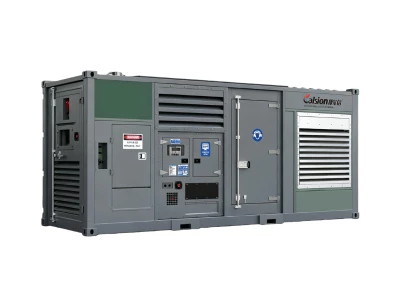
How Do Mitsubishi Diesel Generators Meet Backup Power Requirements for Data Centers and Other Critical Loads?
Release time: 2026-09-30
Table of Contents
As the demand for continuous power supply grows across data centers, hospitals, telecommunications facilities, and large-scale industrial projects, backup power has become essential infrastructure for ensuring the stable operation of critical loads. In the event of a grid failure, diesel generators must start rapidly and support servers, UPS systems, cooling equipment, and other critical loads; consequently, the performance, capacity configuration, and system integration capabilities of Mitsubishi diesel generators directly impact the reliability of the backup power supply.
1. Why are Mitsubishi diesel generators suitable for data center backup power?
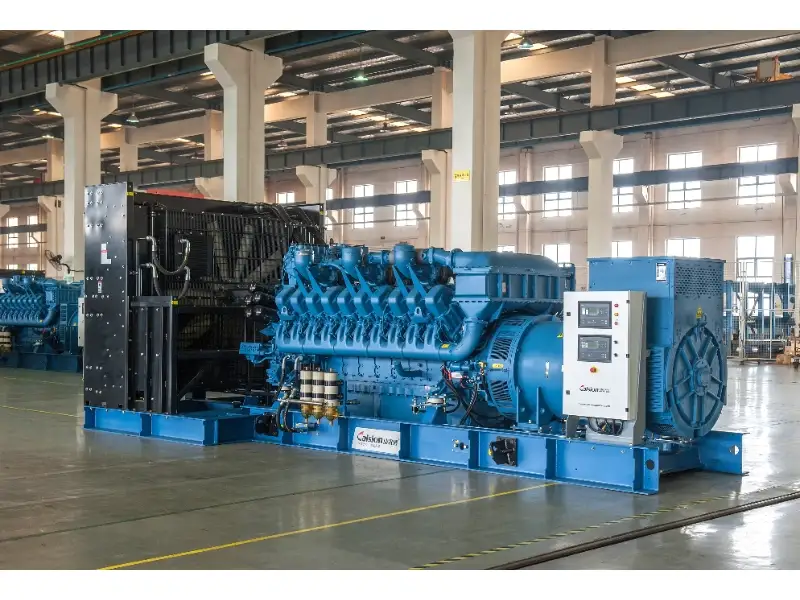
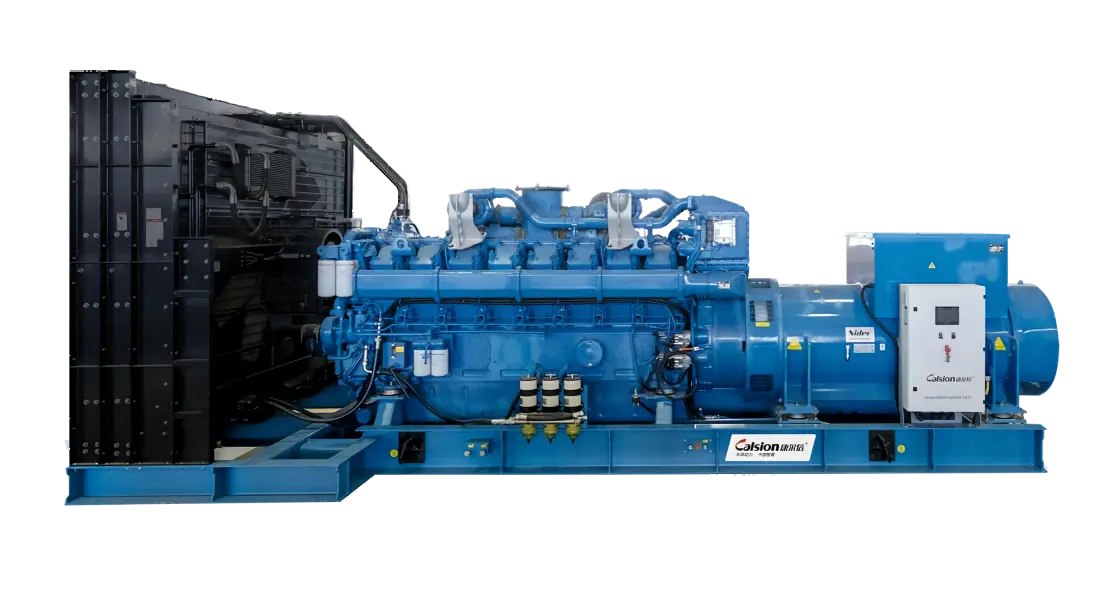
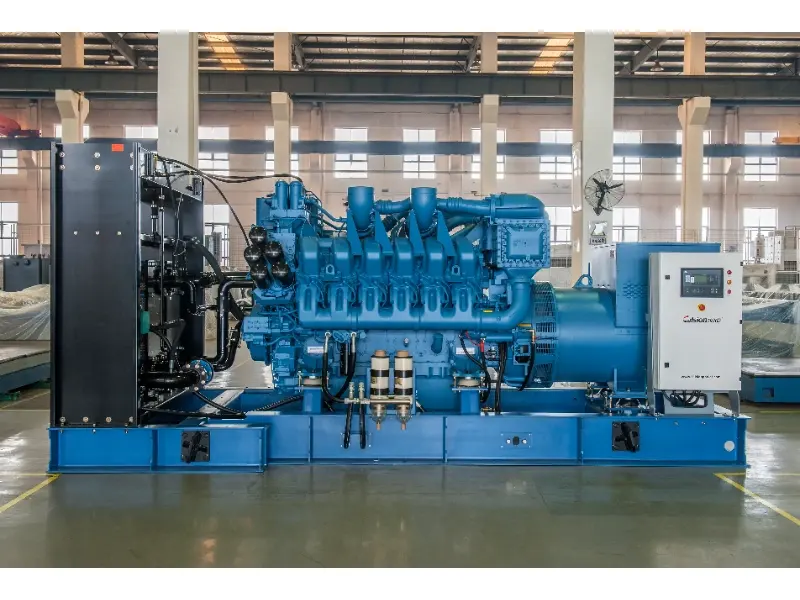
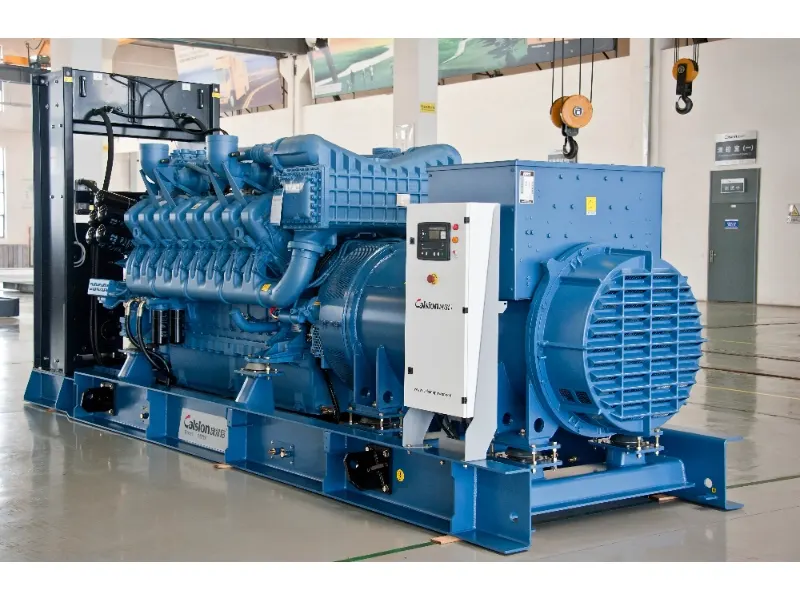
Data centers house numerous critical loads—such as servers, network equipment, UPS systems, and cooling infrastructure—that demand high power stability and rapid equipment startup capabilities. Mitsubishi diesel generators serve as a secondary backup source following the UPS; they start quickly after a grid outage to provide continuous emergency power to the data center.
In practical applications, generator sets are typically used in conjunction with Automatic Transfer Switches (ATS) and UPS systems. The UPS provides short-term uninterrupted power, while the diesel generator takes over to meet longer-term power demands after starting, creating a multi-layered backup power architecture.
2. How are sudden load spikes in data centers handled?
Data center loads are not entirely constant; the startup of servers and cooling equipment can generate significant instantaneous power demands. Therefore, backup generators cannot be selected based solely on average load; factors such as peak load, motor starting load, and UPS load characteristics must also be considered.
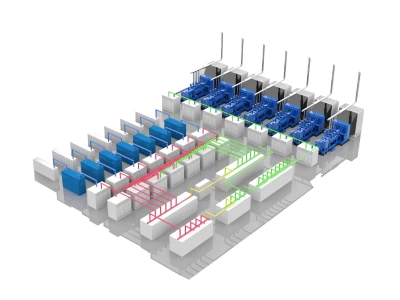
During the system design phase, generator capacity should be calculated based on actual loads, with an appropriate margin reserved. For large data centers, multiple diesel generators can be connected in parallel; load sharing allows for efficient distribution of the load, thereby increasing power capacity while enhancing system redundancy.
3. Besides data centers, what other critical loads are supported?
The application of Mitsubishi diesel generators for backup power extends beyond data centers. For instance, hospitals require reliable power for operating rooms, life-support equipment, and medical systems; telecommunications facilities must maintain the operation of base stations and communication networks; financial institutions need to ensure the continuous functioning of servers, trading systems, and data storage equipment; and industrial enterprises need to prevent equipment damage and production interruptions caused by sudden power outages. For these scenarios, generator sets require tailored configurations based on load type, operating duration, environmental conditions, and reliability requirements.
4. How can the reliability of the backup power system be further enhanced?
For high-priority critical loads, a single diesel generator may not suffice to meet long-term reliability requirements. Projects can employ designs such as N+1 redundancy, multi-unit paralleling, dual-source power supply, and automatic transfer switching based on specific needs.
Simultaneously, attention must be paid to fuel reserves, cooling systems, ventilation, control systems, and regular maintenance schedules to ensure the generator not only “starts up” but also operates stably and continuously during prolonged utility power outages.
5. What is the core value of Mitsubishi diesel generators?
For data centers and other critical loads, the value of a backup diesel generator lies not merely in providing rated power, but in establishing a backup power system capable of rapid response, stable operation, and redundancy. Therefore, when selecting Mitsubishi diesel generators, the overall design should account for specific project requirements regarding power capacity, load characteristics, backup tier, operating environment, and future expansion needs.
Ultimately, the synergy between diesel generators, UPS, ATS, and power distribution systems enables the creation of a highly reliable backup power infrastructure for data centers, hospitals, telecommunications facilities, and industrial projects.
When selecting Mitsubishi diesel generators for data centers and other critical loads, one must look beyond rated power and comprehensively consider load characteristics, starting performance, runtime, redundancy design, and the integration of systems such as ATS and UPS. Calsion can develop optimal plans—ranging from generator set configuration and paralleling systems to comprehensive backup power solutions—tailored to the specific power needs of different projects, thereby providing stable, reliable, and scalable backup power support for critical loads.
FAQ: Mitsubishi Diesel Generator for Critical Power
1. Is a Mitsubishi diesel generator suitable for data centers?
Yes. It can provide reliable standby power for data centers, servers, UPS systems, cooling equipment, and other critical loads.
2. How do I choose the right Mitsubishi generator size?
Consider total load, peak demand, motor starting current, UPS characteristics, and future expansion requirements.
3. Can Mitsubishi diesel generators work with UPS and ATS systems?
Yes. A properly configured generator can work with UPS and ATS to provide automatic backup power during utility failures.
4. Can multiple Mitsubishi generators operate in parallel?
Yes. Multiple generator sets can be configured for synchronized operation, load sharing, and higher capacity and/or redundancy.
5. How can I improve backup power reliability for critical loads?
Consider N+1 redundancy, automatic transfer, sufficient fuel storage, regular maintenance, and professional system integration.
For data centers and other critical loads, selecting Mitsubishi diesel generators requires looking beyond rated power; one must comprehensively consider load characteristics, starting performance, operating duration, redundancy design, and system integration—including coordination with ATS and UPS units. Calsion tailors solutions to the specific power requirements of each project, expertly planning everything from generator set configurations and paralleling systems to comprehensive backup power schemes, thereby delivering stable, reliable, and scalable backup power support for critical loads.