

SDEC (Shangchai) Engines: What Generator Buyers Actually Need to Know
Release time: 2026-10-26
A plain-language guide for overseas buyers evaluating SDEC-powered generator sets
If you have been comparing generator sets, you have probably run into the name SDEC — or Shangchai, as it sometimes shows up. Most overseas buyers do not start by asking “is it any good?” The real question is simpler and more confusing: what exactly is this thing?
This is not a spec-sheet shootout. It is a straight talk about who makes SDEC engines, why the name keeps appearing on quotes from Shanghai to Lagos, and what it should — and should not — mean when you are choosing a generator.
SDEC at a glance
- Full name: Shanghai Diesel Engine Co. (Chinese: 上柴 / Shangchai)
- Founded: 1947, in Shanghai
- Parent group: SAIC Motor (since 2008)
- What it is: first and foremost a diesel‑engine brand.
- Power range: roughly 10 kVA to 2,500 kVA-plus, in both 50 Hz and 60 Hz
One name, three spellings
SDEC, Shangchai, and the full “Shanghai Diesel Engine Co.” all point to the same manufacturer. Distributors, OEMs, and contractors swap the terms freely, the way people say “Coke” or “Coca-Cola.” After a 2021 restructuring, the legal entity is now Shanghai New Power Automotive Technology Co., Ltd. — but the engines still wear the SDEC badge. So when you see “SDEC engine,” do not read it as a newcomer or a side brand. It is the product line of a diesel engine maker that has been around longer than most of its competitors.
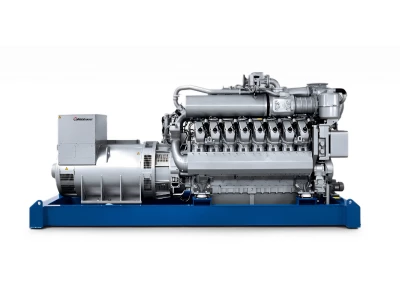
The one point worth taping to your notebook: SDEC builds engines. It does not build complete generator sets. Hold that thought — it saves a lot of confusion later.
Older than most of its rivals
SDEC traces back to a factory opened in Shanghai in April 1947. By 1958 it had designed and built China’s first 135-series medium-power diesel engine — on its own, not by copying. That 135 platform became the backbone for generators, ships, trucks, and construction equipment for decades.
It went public in 1993 as a state-controlled listed company, with both A- and B-shares on the Shanghai exchange. The dates matter less than the through-line: this is not a company that popped up to ride the low-cost export wave. Its engineering pedigree runs back to the early days of China’s diesel industry.
Why the SAIC link actually matters
In 2008, SDEC joined SAIC Motor — China’s largest car group — as a wholly owned subsidiary. Buyers usually do not care that an engine maker is owned by a car company. What actually matters: an engine business sitting inside a group with real R&D systems, procurement standards, and manufacturing discipline. That does not mean every SDEC engine beats every rival. It means production consistency rests on an industrial base bigger than one plant.
SDEC has also pulled in outside engineering over the years. The D-series was co-developed with Austria’s AVL. It has built engine families together with Mitsubishi Heavy Industries. The pattern is steady integration and localization of proven platforms — not isolated in-house tinkering.
Where you already find them
Specs are one thing; seeing the name in the field is another. SDEC’s generator-drive engines span roughly 10 kVA to 2,500 kVA-plus, in both 50 Hz and 60 Hz. That covers everything from a small backup unit to a sizeable industrial plant.
The distribution footprint is real, not aspirational. In Sub-Saharan Africa, a single authorised distributor ships engines, gensets, and genuine parts across South Africa, Namibia, Botswana, Malawi, Mozambique, Zambia, Zimbabwe, Eswatini, and Lesotho. Comparable networks exist across Southeast Asia and the Middle East, where Chinese-engine gensets are common.
The number I would actually trust: the D-series — a mature platform used in generators, trucks, and industrial gear — has been on the market about 20 years and now has over a million units in service. A million running engines answers the only question that counts for a buyer: do people actually use these?
What SDEC is not
Any honest look at a brand has to draw lines, not just list wins.
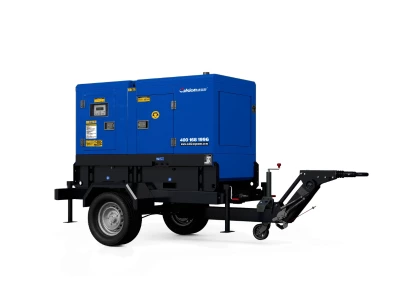
While SDEC manufactures a small volume of factory‑complete generator sets, nearly all “SDEC generator” offerings you see on quotations are units assembled by independent OEMs using SDEC engines as their power core. The engine comes from SDEC’s factory. The alternator, controller, cooling package, enclosure, and the final load test come from the assembler.
Positioned honestly, SDEC engines are a domestic first-tier, mid-to-premium option out of China: solid for commercial and industrial duty, priced well below the international Tier 1 names, and backed by a parts network that keeps expanding in export markets. They are not the automatic pick when the job demands redundancy at any cost. Say that out loud before you buy, and you will compare on the right terms.
Why know the engine before you compare sets
A generator’s reliability is the sum of a few things: the engine, how well it is integrated, the load-test standard, and who stands behind it after delivery. The engine is the heart — but a heart alone does not make a dependable machine.
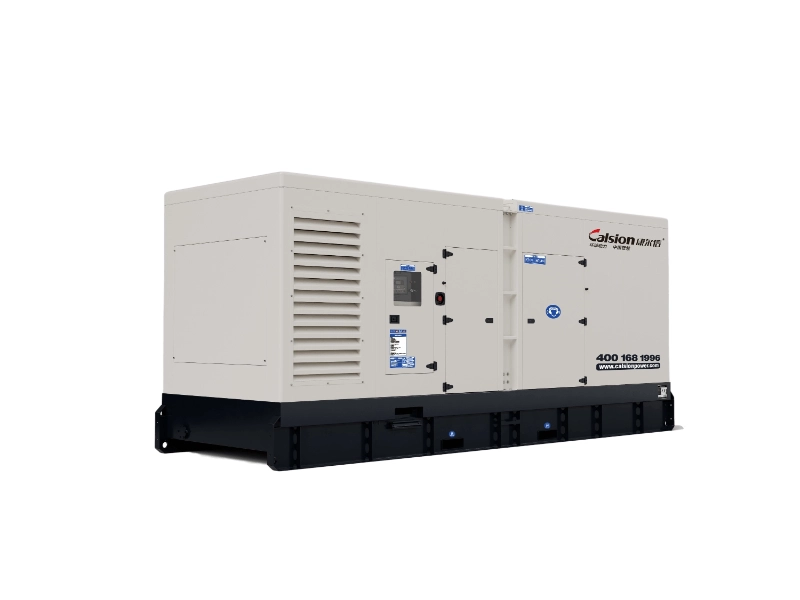
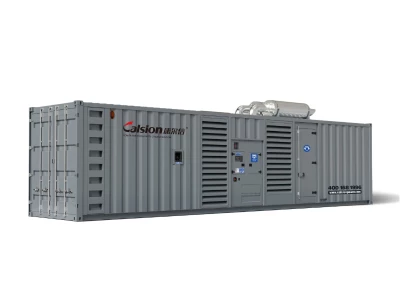
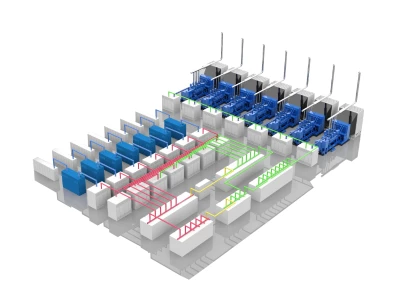
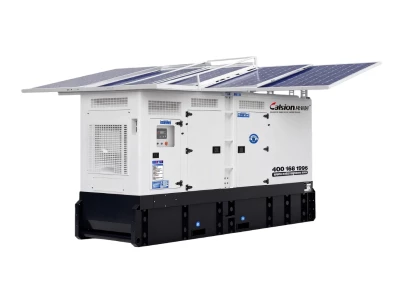
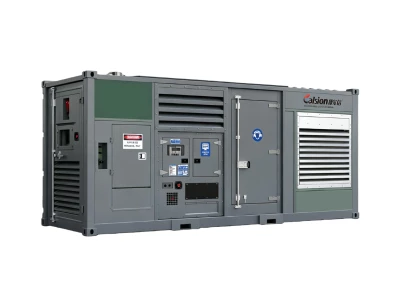
Calsion builds generator sets. We use genuine SDEC engines in projects ranging from data centres to telecom sites to oil fields. I am not writing this to sell you one. I am writing it because “SDEC” is a name many buyers meet before they understand it — and once you understand the name, comparing configurations, test reports, and warranty terms gets a whole lot easier.
If you are weighing an SDEC-powered set for a specific power band and load profile, skip the generic brochure. Send us your load profile. We will tell you which SDEC platform fits and exactly what to check before you sign.